Yard Debris Removal in Bothell, WA
Branches, leaves, soil, treated lumber, and rocks do not all follow the same disposal path. Sorting the pile before pickup prevents surprises and helps the truck load cleanly.
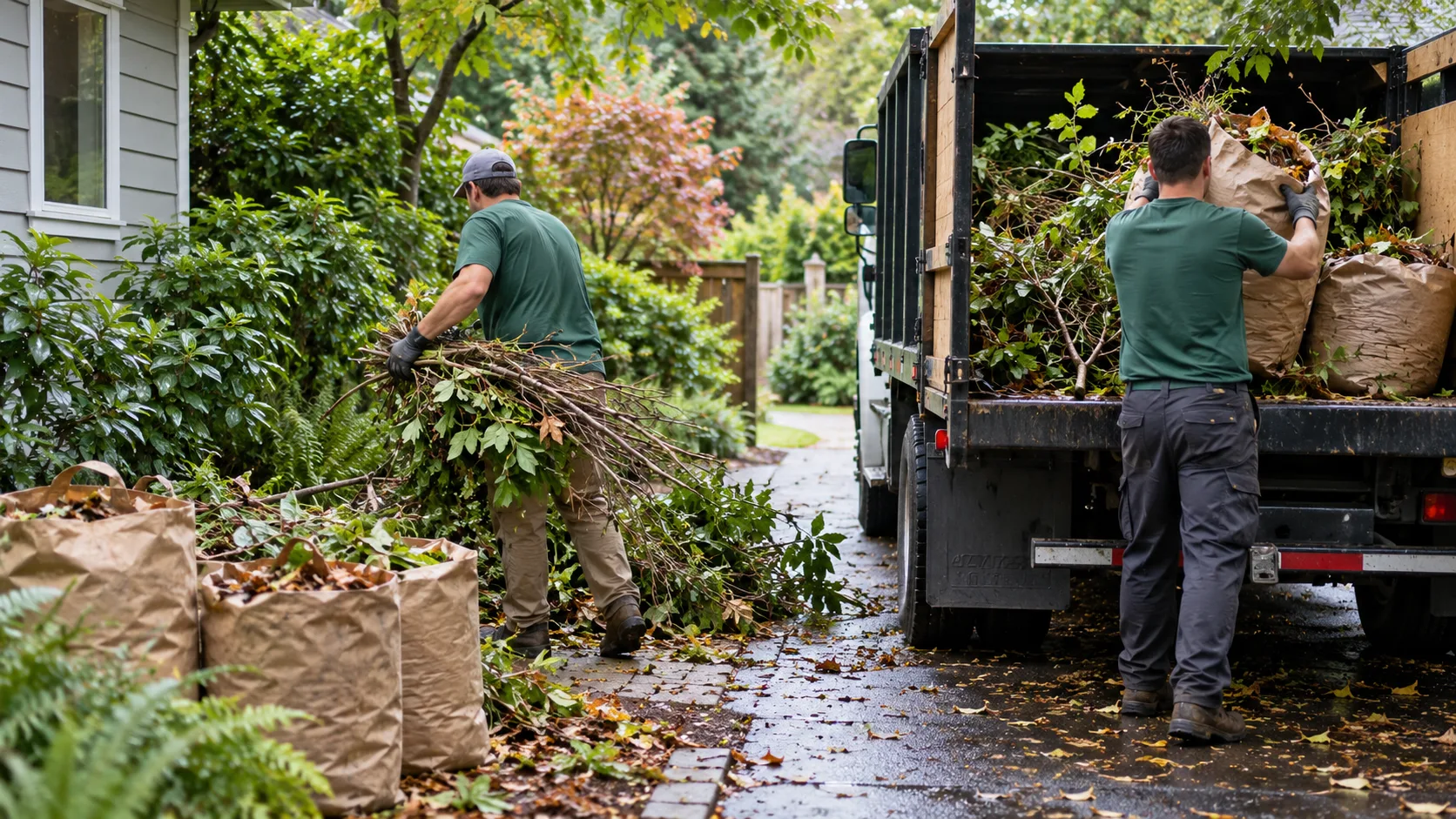
What this route can cover
- Branches, brush, leaves, weeds, and ordinary pruning debris
- Paper yard bags and manageable tied bundles
- Clean untreated wood disclosed separately
- Debris placed in an accessible yard, driveway, or side path
Needs another plan
- Active tree removal, climbing, or stump grinding
- Soil, sod, rocks, concrete, and mixed construction debris unless reviewed
- Painted, stained, or pressure-treated lumber mixed with yard waste
- Pesticides, fertilizers, fuel, or other chemicals
Prepare the path, not just the pile
Good access notes protect time, floors, walls, and expectations.
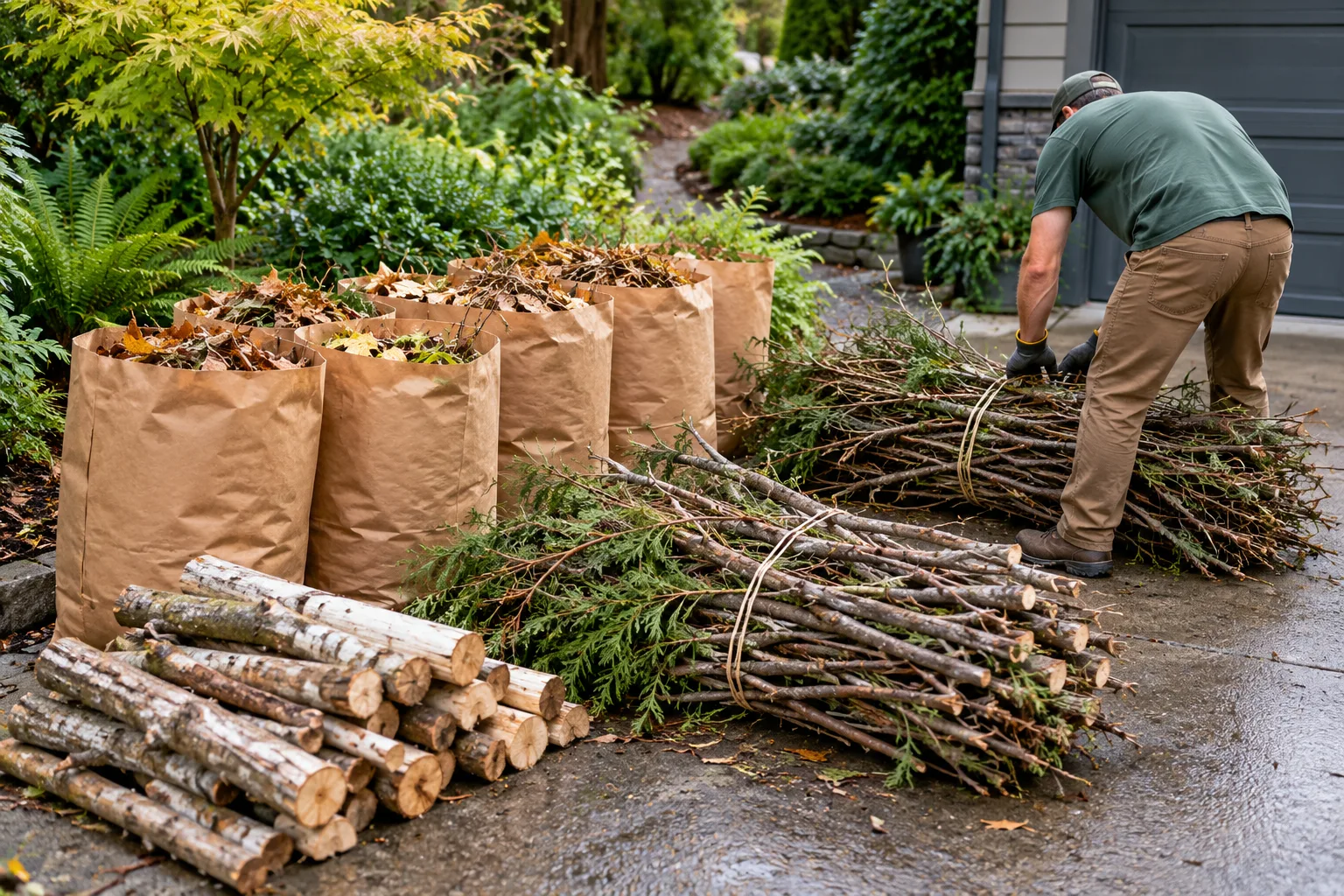
- Separate branches, bagged leaves, clean wood, and non-yard material.
- Use paper yard bags where practical and avoid hiding plastic or metal in the pile.
- Cut or bundle long branches into manageable lengths.
- Explain gate width, slopes, steps, and carry distance from the pile to parking.
What shapes the estimate
Volume, branch size, moisture, weight, access, bundling, and mixed materials affect a yard-debris job. Photos should show the whole pile and the route to the truck.
Read the companion preparation guideQuestions to settle before pickup
Are soil and rocks yard debris?
They are much denser and usually follow a different disposal path. List them separately for review.
Can branches go in plastic bags?
Keep yard material visible and separate. Paper bags or tied bundles make sorting easier and avoid hidden plastic.
Do you cut down trees?
This page covers removal of already-cut debris. Tree work and stump grinding require separate equipment and scope.
Nearby service pages
Location pages cover the primary residential junk removal route.