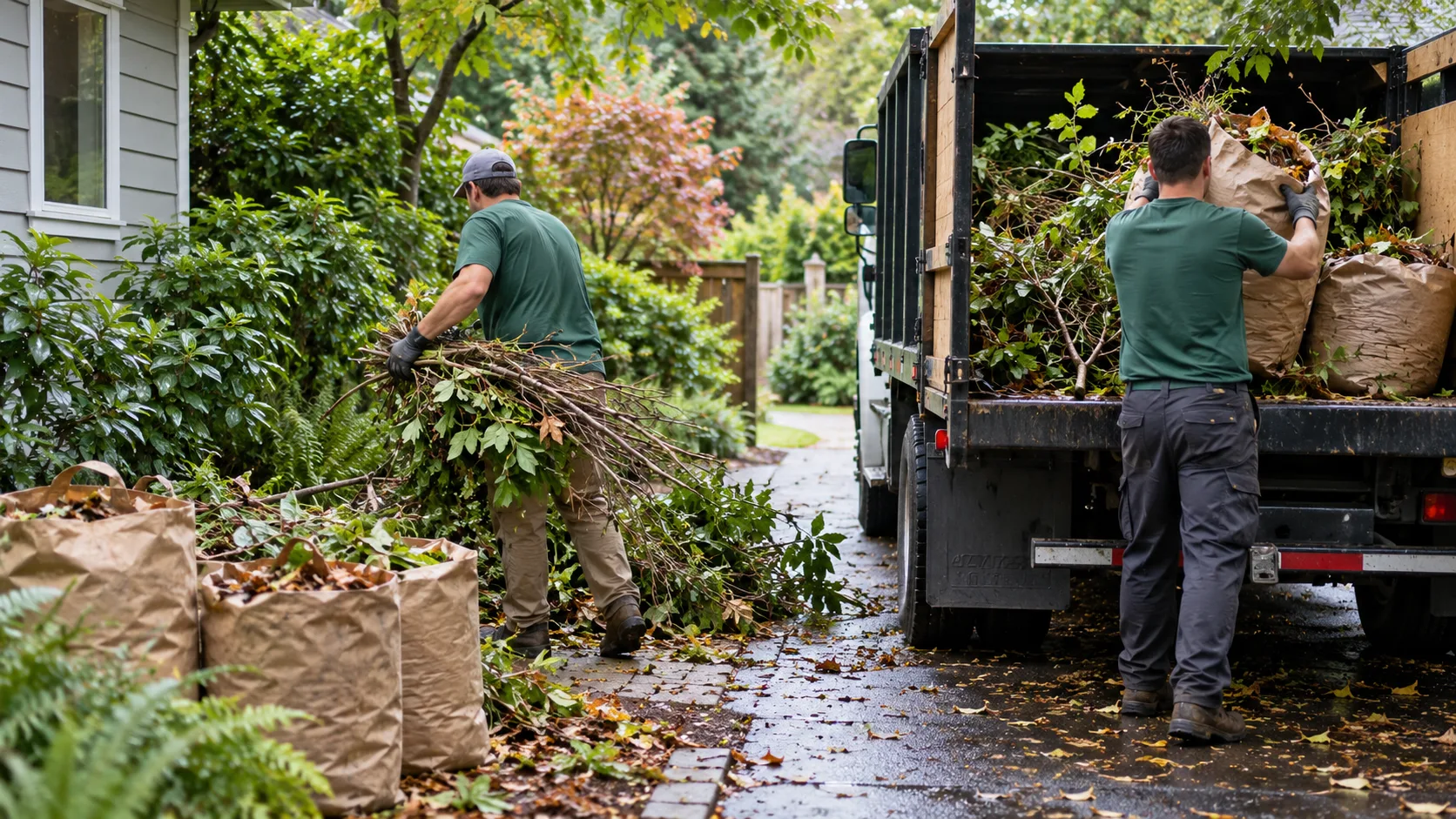
Make separate piles for branches, bagged leaves, clean untreated wood, and dense or non-yard material. Soil, sod, rocks, plastic, metal, and treated lumber should not be hidden in an organic load.
Branches and brush
Bundle manageable branches with twine and keep the cut ends facing the same direction. Long, tangled branches take more truck space and can block a side-yard path. If material came from professional tree work, confirm whether that contractor already includes haul-away.
Leaves, weeds, and grass
Use paper yard bags where practical. Keep plastic bags, plant pots, irrigation parts, and landscape fabric out of the pile. Wet leaves are much heavier than dry leaves, so photograph the bags and mention recent rain when discussing the load.
Clean wood is its own category
Clean wood means more than “wood-shaped.” Separate unpainted and untreated lumber from painted, stained, pressure-treated, or composite material. Remove large metal hardware where possible and identify pallets or plywood separately.
Sort before estimating
| Group | Examples | Keep separate from |
|---|---|---|
| Yard waste | Branches, brush, leaves, weeds | Plastic, metal, soil, rocks |
| Clean wood | Unpainted lumber, pallets, plywood | Treated or painted wood |
| Dense material | Soil, sod, rock | Light organic debris |
| Special material | Chemicals, fertilizer, fuel | Every ordinary hauling pile |
Show the access route
Photograph the whole pile from two angles and the path to parking. Include gate width, steps, slopes, soft ground, overhead branches, and the distance from the pile to the truck. A compact pile behind a narrow gate can take longer to move than a larger pile beside a driveway.
The City of Bothell publishes current yard-waste and clean-wood limits for its voucher program. Those rules are useful when comparing self-haul options, but a private pickup still needs its own item and access review. For an already-cut pile, start with yard debris removal in Bothell.