Appliance Removal in Bothell, WA
Large appliances combine weight, tight clearances, and utility connections. A safe pickup starts with confirming that the unit is disconnected and the path is ready.
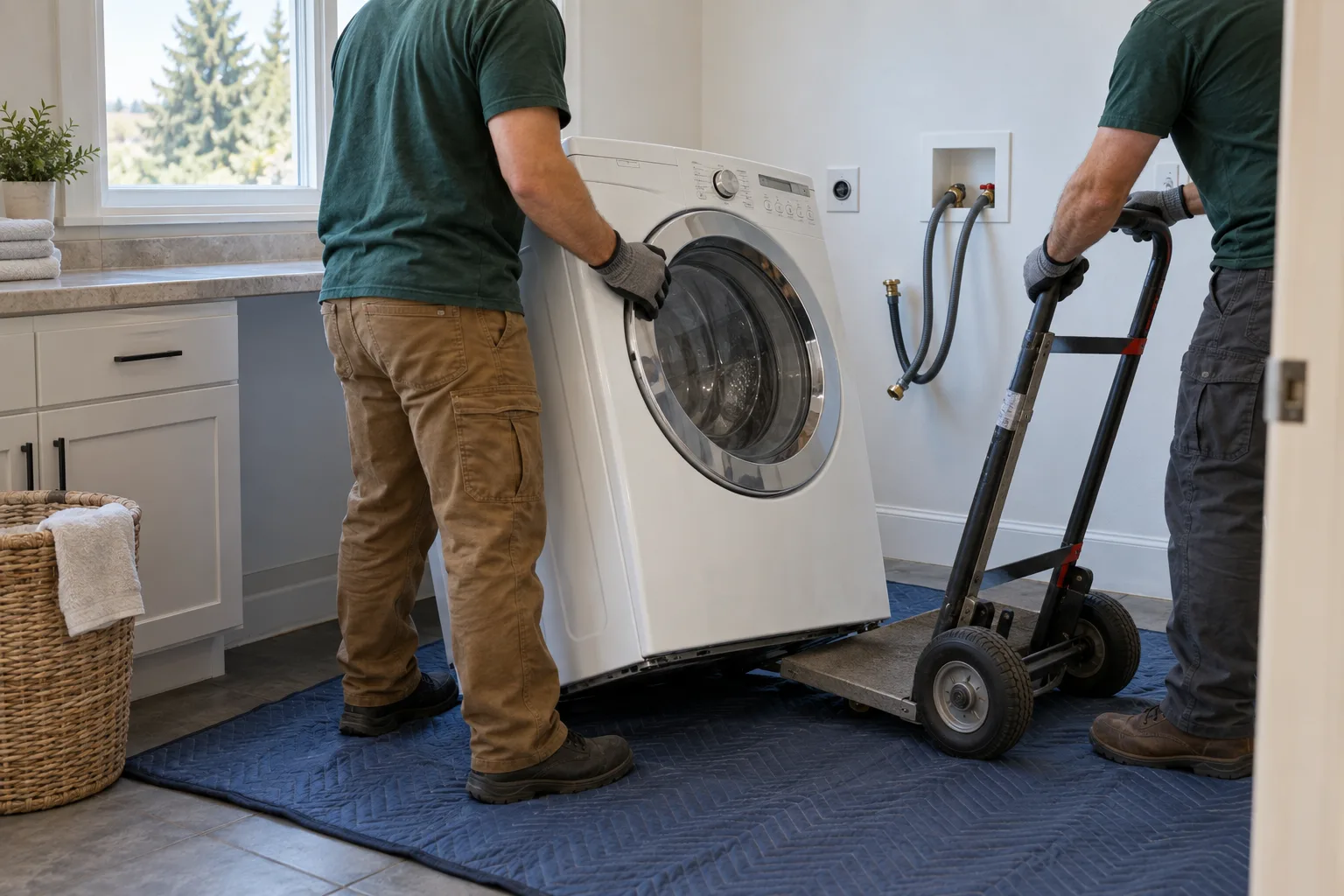
What this route can cover
- Washers, dryers, stoves, and similar freestanding appliances
- Refrigerators and freezers reviewed before scheduling
- Small household appliances grouped with a larger pickup
- Careful movement through an agreed, accessible route
Needs another plan
- Disconnecting gas, hard-wired electrical, or plumbing connections
- Removing built-in units from cabinetry
- Units leaking fluid or containing food, chemicals, or unknown material
- Specialty commercial equipment without prior review
Prepare the path, not just the pile
Good access notes protect time, floors, walls, and expectations.
- Use the right licensed trade when a gas, hard-wired, or plumbing disconnect is required.
- Empty and clean the appliance, including refrigerator and freezer contents.
- Secure loose doors, racks, trays, and hoses.
- Measure the appliance and every doorway on the removal path.
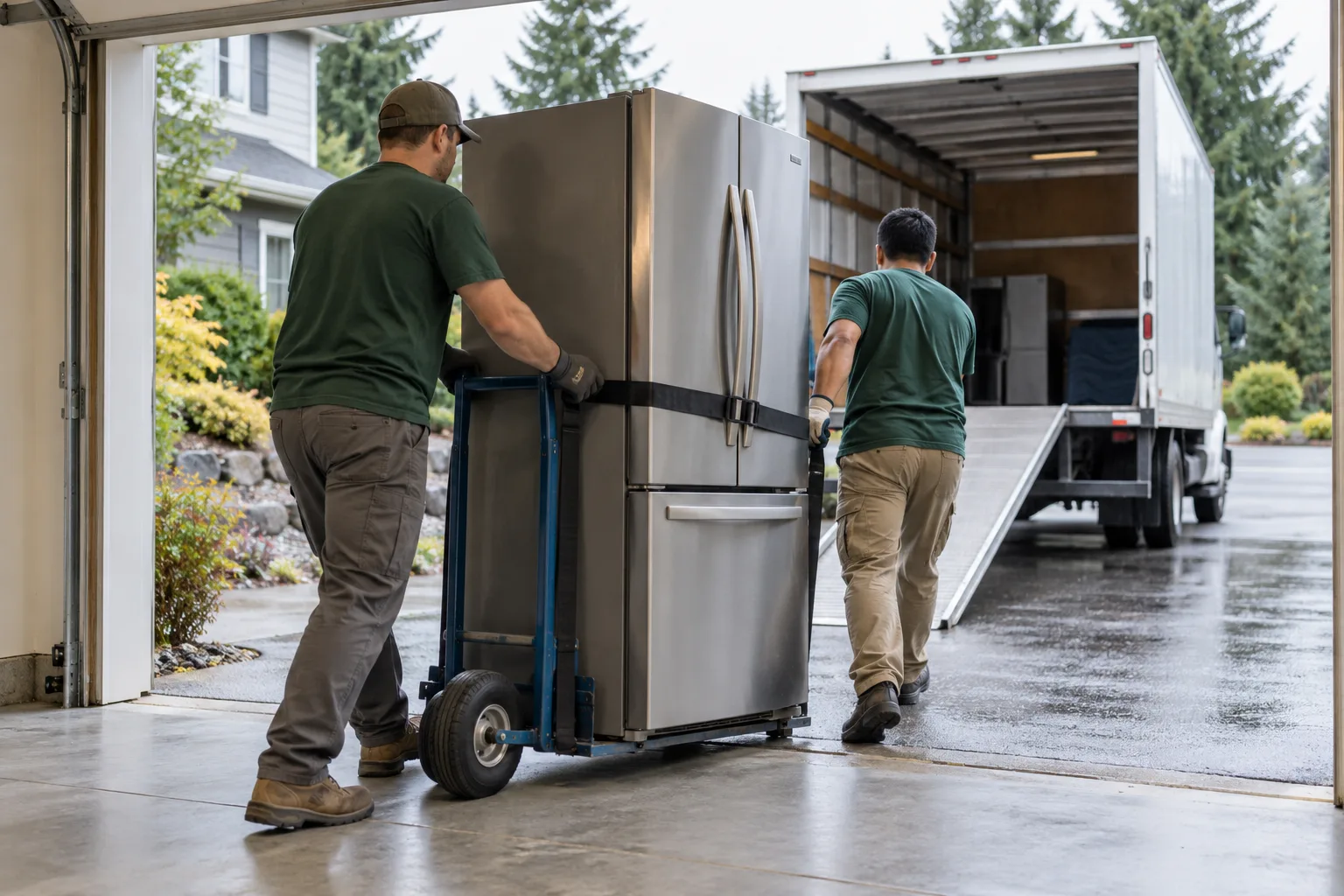
What shapes the estimate
Appliance type, weight, refrigerant handling, stairs, disconnection status, and access all matter. Identify the model type and send a photo of the connections and the full route.
Read the companion preparation guideQuestions to settle before pickup
Will the crew disconnect my appliance?
Do not assume utility disconnection is included. Confirm the unit is safely disconnected before the pickup window.
Can food stay in a refrigerator?
No. Empty the unit and remove loose bins or shelves that could shift during movement.
Why does refrigerant matter?
Refrigerators, freezers, and some air-conditioning equipment can require different recycling or handling steps than ordinary metal appliances.
Nearby service pages
Location pages cover the primary residential junk removal route.